
Why Your Dryer Takes Forever to Dry (And How to Fix It)
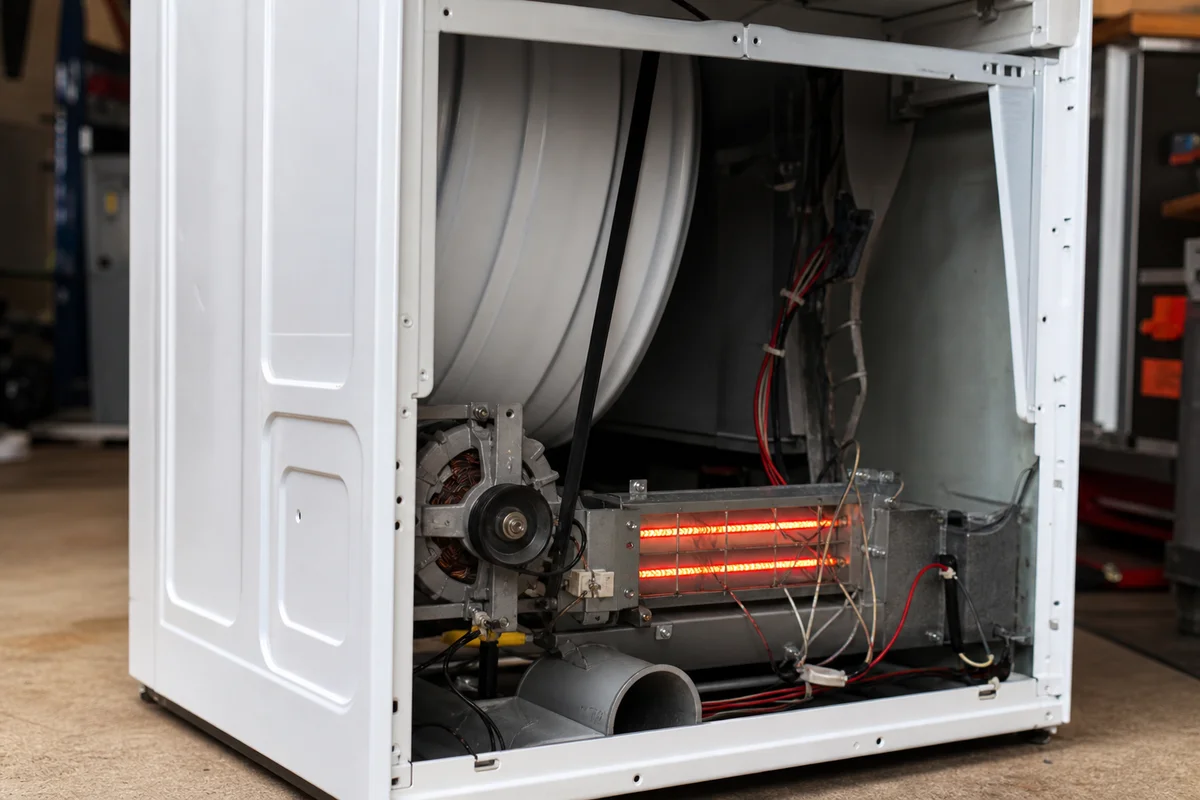
A dryer that takes forever to dry, or finishes a cycle with clothes still damp, almost always comes down to one of three things. A clogged lint screen or vent that blocks airflow. A failed heating part, an igniter or gas valve on a gas dryer, or a heating element or thermostat on electric. Or an overloaded drum. Check airflow first. It is the easiest fix and the most common cause.
Why is my dryer not drying clothes anymore?
Three causes account for almost every case. Reduced airflow, from a clogged lint screen or a blocked vent. Reduced heat, from a failing part. Which part depends on whether the dryer is gas or electric. Or a drum packed too full for air and heat to reach every piece of clothing.
True Family sees this symptom often. "The dryer runs but clothes stay damp" is one of the most common complaints its technicians diagnose. Right alongside a drum that will not spin, a dryer that shuts off a few minutes in, one that overheats, and one that squeaks or scrapes. Each symptom points to a specific part. A good diagnosis starts by narrowing down which cause is happening.
Could a clogged lint screen or vent be the cause?
Start here. It is free and takes about two minutes.
Pull the lint screen and look at it. Dryer sheets leave behind a waxy film. If the screen feels coated even after you remove the visible lint, that film is blocking airflow through the mesh. Wash it with warm water and dish soap. Scrub gently. Let it dry fully before putting it back.
If the screen is clean and the problem continues, check the vent next. Pull the dryer out enough to see the vent hose. Look for a crushed or sharply bent section, often where the dryer sits too close to the wall. Look at the outside vent cap too. Leaves, a bird's nest, or built-up lint can block the opening. A clogged vent traps the hot, moist air the dryer needs to push out. The drum keeps spinning. The clothes barely dry.
A clean vent is also a safety issue, not just a performance one. True Family's own dryer FAQ is direct about this. An overheating dryer can be a fire risk, especially when the thermal fuse or the vent system is the problem. If your dryer runs hot to the touch, squeals, or smells hot, stop it. Unplug it. Call for same-day or next-day service instead of running another load.
Why does my dryer run but not heat?
Sometimes the drum spins and the timer runs, but the load comes out just as wet as it went in. That means the dryer is not making enough heat. The cause depends on whether it runs on gas or electric.
On a gas dryer, a no-heat or weak-heat problem usually traces to a bad igniter, a faulty gas valve, or a blown thermal fuse. On an electric dryer, the same complaint usually traces to a burned-out heating element or a bad thermostat. These are different parts on different fuel types. That is exactly why "just replace the heating element" is the wrong answer for a gas dryer. And "check the igniter" is the wrong answer for an electric one. True Family diagnoses the real cause on your specific dryer, gas or electric, before any part gets replaced.
Get your dryer's real cause diagnosed instead of guessing at parts. A technician can usually tell within one visit whether the fix is a quick part swap or something bigger.
Is overloading the drum slowing your dryer down?
Yes. It is one of the easiest causes to rule out.
Clothes need room to tumble and separate so air can reach every piece. A packed drum traps damp items against each other in the middle. Hot air barely circulates there. If one load used to dry fine, and a bigger load from the same dryer comes out damp, that is overloading. Not a broken part. Split the load in half and run it again before you assume something is wrong with the machine.
Why gas and electric dryers fail differently in the Austin area
It comes down to how old the house is and what kind of hookup the dryer runs on.
Fifteen percent of Austin's housing dates from before 1970. Most of it sits in the city's central neighborhoods. Those older homes carry the metro's legacy gas lines. So a slow-drying or no-heat gas dryer in central Austin points first at an aging igniter or gas valve.
Out in Pflugerville, it is almost the opposite story. Only 4% of the city's housing was built before 1980. Nearly the entire city is newer construction, wired for a standard electric dryer circuit. A no-heat or slow-dry complaint there points first at the heating element or thermostat, not a gas-line issue.
There is a second local pattern worth knowing. Only 43% of Austin's homes are single-family detached, and 43% of occupied homes are owner-occupied. A large share of the city lives in condos and apartments with stacked or closet-installed dryers. Those setups often have longer, more twisted vent runs than a standalone laundry room. A longer, more twisted vent traps lint faster and restricts airflow sooner. If you live in a condo or a unit with a stacked washer-dryer, check the vent even sooner than you would on a standalone machine.
Is a dryer that overheats or smells hot safe to keep running?
No. Stop it and unplug it.
True Family's technicians are clear on this point. A dryer that overheats, squeals, or smells hot should not run again until someone checks it. The thermal fuse and the vent system are the usual suspects behind an overheating dryer. Both are fire-risk issues, not just inconvenience issues. Running another load and hoping it clears itself up is the wrong move.
Get your dryer drying again
Most slow-dry and no-heat complaints trace back to one of three things. A blocked lint screen or vent. A failed heating part. Or an overloaded drum. Checking the lint screen and the vent costs nothing, and it solves the problem more often than any other step. If that does not fix it, the cause is inside the machine. The fix from there depends on whether your dryer runs on gas or electric.
Owner Joel Gurrola has 16 years of hands-on experience fixing dryers and washers, from everyday brands to high-end built-ins. True Family is family-owned, licensed and insured. Every technician is background-checked. Most repairs carry a 1-year warranty, and you get a clear price before any work starts.
Curious what a repair typically runs? See what dryer repair typically costs. Wondering if your dryer is even worth fixing? Read how to decide between repair and replace. True Family's dryer repair service covers every major brand, gas or electric. The company works with homeowners across Pflugerville and the rest of the Austin metro. Book a dryer repair and get a clear diagnosis before any work begins.
Talk to True Family Appliance
Questions about your appliance repair job? We serve Pflugerville and the surrounding area with honest, upfront advice.
Related articles
FAQ
Related questions
How do I know if my dryer vent is clogged?
Two signs point straight at the vent. The outside of the dryer feels hot to the touch during a cycle, or the room gets noticeably warmer and more humid than it used to. If a load that used to take 45 minutes now takes over an hour, check the vent before anything else.
Can I clean a dryer vent myself?
The lint screen, yes, every time you dry a load. The full vent run behind the dryer and out through the wall is a bigger job. A long brush kit can reach some of it, but a crushed section, a bird's nest at the outside cap, or a long run with multiple bends is worth having a technician check with the right tools.
Why does my dryer take two cycles to dry one load?
Needing a second cycle almost always means reduced airflow or reduced heat, not a bigger load than usual. Clean the lint screen first. If that does not fix it, the vent is restricted somewhere, or a heating part has partly failed and the dryer is running on weaker heat than it should.
What is the first thing to check if my dryer stopped drying well?
The lint screen. It takes ten seconds and fixes the problem more often than any other single step. If the screen is clean and the dryer still runs long, move on to checking the vent for a kink or blockage.